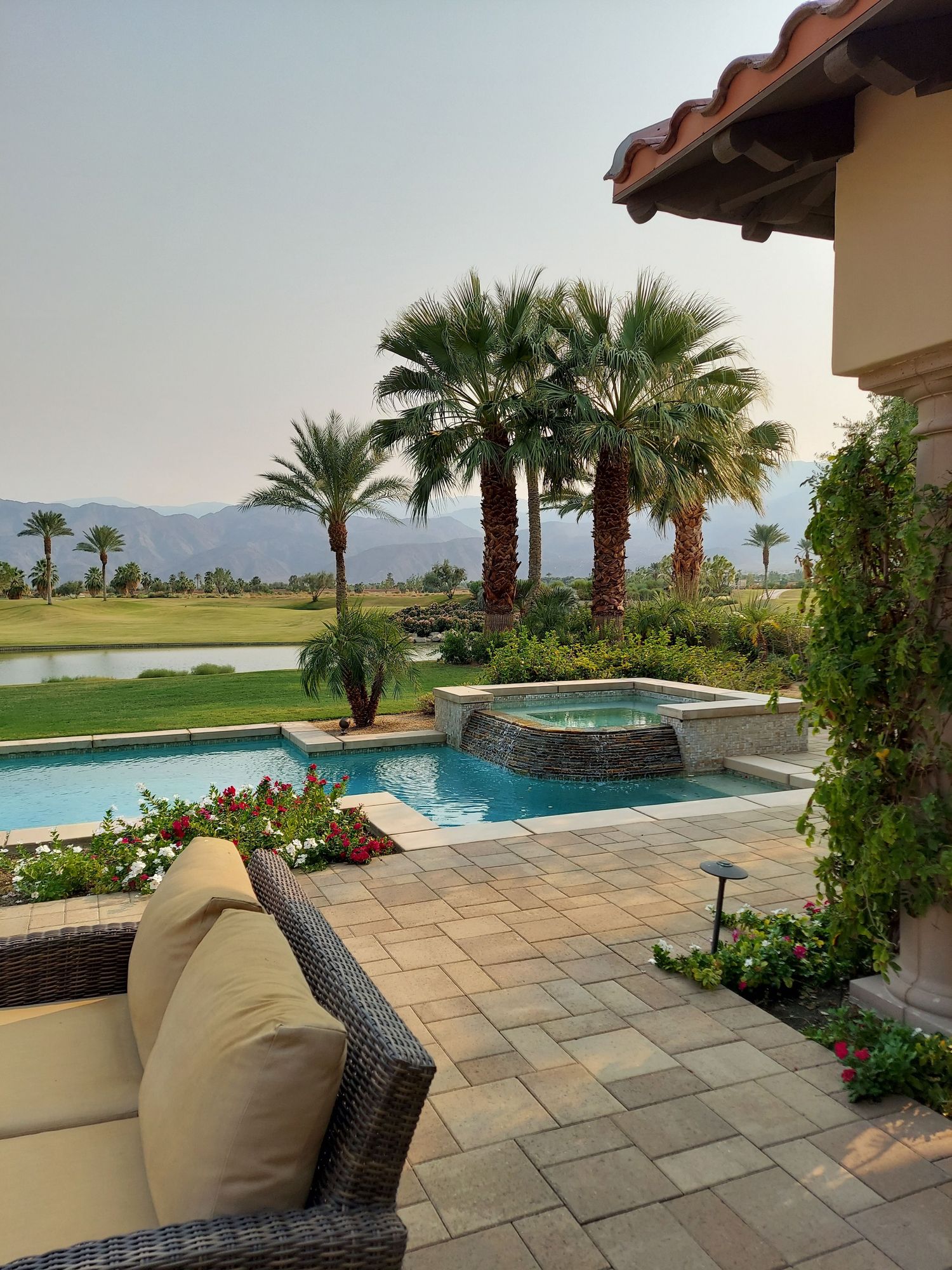
Hardscape is the skeleton of a yard. The patios, walkways, and seating areas are where you actually live outside, and they take the hardest beating from the Queen Creek sun. On a larger lot there is room for real hardscape, and the right materials installed the right way are the difference between a patio that still looks good in ten years and one that fades, shifts, and cracks.
Materials that handle Sonoran sun
Not every surface belongs in this climate. Concrete pavers and interlocking systems hold up well and come in lighter colors that stay cooler underfoot. Travertine is a desert favorite because it reflects heat rather than soaking it up, so it stays walkable on a hot afternoon and ages gracefully. Flagstone brings a natural look that suits desert planting and open, mountain-backed lots. The materials to use carefully are the dark, heat-absorbing ones that turn a summer patio into a surface nobody wants to cross. The right pick depends on the spot and how much sun it takes.
Installed to last, not just to look good
A paver patio is only as good as what is under it. Base preparation, compaction, and drainage decide whether it stays flat and level or settles after a couple of monsoon seasons. Edge restraints lock everything in place, and proper grading sends storm water away from the house rather than toward it. This is the part you never see once the job is done, which is exactly why it has to be right. Our build work treats the base as seriously as the surface.
Hardscape ties a big yard together
Pavers do more than give you a place to sit, and on a large Queen Creek lot they do real work. A walkway connects a spread-out yard and guides how you move through it, a patio anchors the gathering space so the openness does not feel empty, and a low seat wall doubles as seating and a planting edge. Done with intent, hardscape is what turns a lot of open ground into one designed yard. You can see how it comes together across Queen Creek projects in our gallery.
Built by one crew, backed for the long haul
Hardscape is heavy, exacting work, and the quality lives in the prep you cannot see. We build it in-house with crews that do this every week across Queen Creek, and we stand behind what we install, which is the difference between a patio that holds and one you are repairing in a few years.
Frequently Asked Questions
Which pavers are best for the Queen Creek heat?
Lighter concrete pavers and travertine tend to perform well because they stay cooler underfoot and hold up to sun. The right choice depends on the spot and how much direct sun it gets.
Do paver patios crack like concrete slabs?
Individual pavers flex with the ground rather than cracking across a slab, and a damaged one can be lifted and replaced. A properly compacted base keeps the whole surface stable.
Can you match hardscape to my home and lot?
Yes. We choose materials and layout that fit your home and the open, mountain-backed setting, so the hardscape reads as one designed space.
Ready to add a patio in Queen Creek?
Tell us how you want to use the space and we will design hardscape that fits it. Start on our contact page and we will come take a look.